
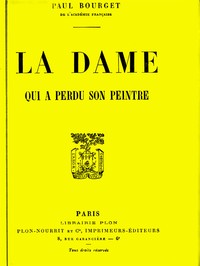
La dame qui a perdu son peintre by Paul Bourget
The Story
Claire is a beautiful, cultured woman in 19th-century Paris. For years, her life had a perfect center: she was the muse and lover of a celebrated painter. He saw her, painted her, and in many ways, created the version of the world she lived in. When he dies unexpectedly, that world shatters.
The novel follows Claire in the months after his death. She moves through salons and dinners, but she's disconnected, like a portrait that's stepped out of its frame. Friends try to help, and a new, kind man shows interest in her. But Claire is stuck. She's grappling with a terrifying question: if she is no longer his subject, who is she?
Why You Should Read It
This book got under my skin. Bourget doesn't give us big dramatic scenes; instead, he shows us the weight of silence and the emptiness of a room. Claire’s struggle feels incredibly real. It’s about how love can sometimes build a cage, and how freedom, when it comes from loss, can be terrifying.
You feel for her, even when you want to shake her and tell her to move on. It's a sharp, compassionate look at how we can lose ourselves in another person.
Final Verdict
Perfect for readers who love character-driven stories and don't mind a slower, thoughtful pace. If you enjoy novels that explore psychology and emotion over plot, like the works of Henry James or Edith Wharton, you'll find a friend in this book. It’s a small, sad, and beautifully observed gem about finding—or losing—yourself in the gaze of another.
There are no legal restrictions on this material. You are welcome to share this with anyone.
Liam Hernandez
10 months agoIf you enjoy this genre, the character development leaves a lasting impact. Exactly what I needed.
Ethan Clark
1 year agoI didn't expect much, but the flow of the text seems very fluid. One of the best books I've read this year.







Lucas King
10 months agoI came across this while browsing and the depth of research presented here is truly commendable. A valuable addition to my collection.