
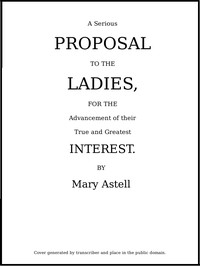
A serious proposal to the Ladies, for the advancement of their true and…
Published anonymously in 1694, A Serious Proposal to the Ladies isn't a story with a plot in the traditional sense. Think of it as a powerful, persuasive essay. Mary Astell, writing directly to her fellow women, makes a straightforward but shocking argument: your education is a joke, designed to make you pleasing ornaments rather than rational beings. She calls this system out for its absurdity and waste of potential.
The Story
There's no protagonist here except Astell's fierce intellect. The 'proposal' is the heart of it. She suggests founding a new kind of institution—a retreat she sometimes calls a 'Monastery'—where women of any class could live together. This wouldn't be for religious vows, but for serious study: philosophy, history, theology, and the sciences. It would be a place for contemplation, deep friendship, and developing a strong, independent mind, away from society's demands to marry for money or status. She outlines how it could be funded and governed, making a practical case for her visionary idea.
Why You Should Read It
Reading Astell is electrifying. Her voice is clear, witty, and impatient. You can feel her frustration with the silly fashions and shallow pursuits pushed on women. More than that, you feel her burning conviction that women are just as capable of deep thought as men. It's foundational feminist philosophy, but it's not dry theory—it's a passionate plea for a better life. She makes you root for her project, even knowing it was never built in her lifetime.
Final Verdict
This is a must-read for anyone interested in the history of ideas, feminism, or education. It's perfect for readers who enjoy primary sources and hearing a powerful historical voice speak for itself. If you've ever read later works by Wollstonecraft or Woolf, you'll see Astell as a brilliant, pioneering ancestor. It's short, direct, and packs a punch that still resonates today.
This historical work is free of copyright protections. Enjoy reading and sharing without restrictions.
Aiden Lewis
1 year agoMy professor recommended this, and I see why.
Ashley Anderson
3 weeks agoVery interesting perspective.
Kevin Gonzalez
1 year agoAfter hearing about this author multiple times, it creates a vivid world that you simply do not want to leave. One of the best books I've read this year.



Paul Davis
6 months agoPerfect.