
Books by Grayson Reyes
200 Books found- Featured
Klingsors letzter Sommer by Hermann Hesse
Authors: Hesse, Hermann, 1877-1962
What if you knew you had one summer left to live? That's the question haunting Klingsor, a painter staring down his own mortality in the golden days of 1919. Hesse gives us a man trying to squeeze every drop of beauty and passion from his final months, wrestling with art, love, and the terrifying freedom of an ending he can see coming. It's not a story about dying quietly—it's about burning as brightly as possible on the way out. If you've ever wondered how you'd live if the clock was suddenly loud in your ears, this short, intense novel will grab you and not let go.
- Featured
Propos de ville et propos de théâtre by Henri Murger
Authors: Murger, Henri, 1822-1861
Ever wonder what Paris was really like for the artists, writers, and dreamers in the 1840s? Henri Murger’s 'Propos de ville et propos de théâtre' is like finding a stack of letters from that world. It’s not a single story, but a collection of sharp, witty observations and short tales that capture the daily hustle, the backstage drama, and the bittersweet reality of trying to make it in the big city. Murger lived this life himself, so it feels incredibly real—sometimes funny, sometimes heartbreaking. If you loved the spirit of 'La Bohème' (which was actually based on his work!), this is the raw, unfiltered source material. It’s a time capsule of ambition, poverty, and artistic passion.
- Featured
Der graue Alltag und sein Licht : Roman by Felicitas Rose
Authors: Rose, Felicitas, 1862-1938
Hey, have you ever felt stuck in a routine that just drains the color out of life? I just finished 'Der graue Alltag und sein Licht' (The Gray Everyday and Its Light), and it hit me right in the feels. It's this beautiful, quiet novel from 1902 about a woman named Anna. Her days are a blur of domestic duty and social expectation—utterly gray. But then, something shifts. The story isn't about a grand adventure; it's about the tiny, almost invisible cracks where light starts to seep into a life that feels predetermined. It asks the question we all wrestle with: How do you find meaning and a spark of your own when the world has already written your script? It's surprisingly modern and deeply moving.
- Featured
The Invisible Government by Dan Smoot
Authors: Smoot, Dan, 1913-2003
Hey, have you ever wondered who's really pulling the strings in Washington? Dan Smoot's 'The Invisible Government' is a book that asks that uncomfortable question and doesn't like the answers it finds. Forget left vs. right—this 1960s exposé claims a hidden network of powerful elites, operating behind the scenes, has been steering American policy for decades. It's a conspiracy theory that feels eerily familiar today, and whether you buy his argument or not, it will make you look at headlines differently. A fascinating and controversial read that feels like it was written for our current moment.
- Featured
Poems by Aleksandr Sergeevich Pushkin
Authors: Pushkin, Aleksandr Sergeevich, 1799-1837
Ever feel like you're missing something magical in poetry? Pushkin's collection is that missing piece. This isn't just old Russian verse—it's a vibrant explosion of life, love, rebellion, and fairy tales, all wrapped in language so clear and musical it feels modern. The real magic is how he makes you feel the duelist's tension, the lover's ache, and the winter's chill, all while keeping one foot in a world of witches and tsars. It's like discovering a secret door to a room full of stories you never knew you needed. If you think classic poetry isn't for you, this book will change your mind.
- Featured
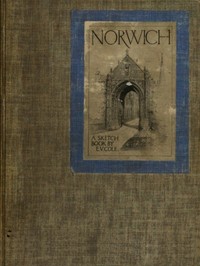
Norwich : A sketch book by E. V. Cole
Authors: Cole, E. V. (Elsie Vera), 1885-1967
Hey, have you seen that little book about old Norwich? It's not a history text at all—it's a collection of sketches and watercolors by an artist named Elsie Vera Cole. She wandered the city in the early 1900s, just drawing what she saw. It's like a quiet, personal time capsule. You don't get grand analysis, you get her immediate view of a cobblestone street, a worn doorway, or the river on a grey day. It feels incredibly intimate, like you're peeking over her shoulder. If you love the city, art, or just the feeling of connecting with a moment from a century ago, you'll find something special here. It’s a peaceful, beautiful escape.
- Featured
Νόμοι και Επινομίς, Τόμος Γ by Plato
Authors: Plato, 428? BCE-348? BCE
Ever wonder what the perfect society would look like? Plato's final work, 'Laws', is his most practical blueprint for a city. Forget the philosopher-kings of 'The Republic'—this is a detailed legal code, debated by three old men on a long walk. It covers everything from education to crime to religious festivals. The mystery isn't a whodunit, but a 'how do we build it?'. It’s fascinating to see Plato, the ultimate idealist, get down in the weeds of property laws and military training. It’s not an easy read, but if you’ve ever been curious about where Western ideas of law and government really started, this is the ground floor.
- Featured
My Reminiscences of the Anglo-Boer War by Ben J. Viljoen
Authors: Viljoen, Ben J. (Ben Johannis), 1868-1917
Hey, if you think you know the Boer War from dry history books, think again. I just read this first-hand account by General Ben Viljoen, and it completely flipped my perspective. Forget the distant, strategic overview—this is the raw, boots-on-the-ground story from the losing side. It’s about guerrilla fighters in ragged clothes, outnumbered and outgunned, trying to hold off the British Empire. The real tension isn't just in the battles; it's in the daily struggle to keep fighting when hope is thin. Viljoen doesn’t paint himself as a perfect hero, which makes his story of resilience and eventual capture all the more gripping. It’s history with a heartbeat.
- Featured
Plotinos: Complete Works, v. 1 by Plotinus
Authors: Plotinus, 205?-270
Hey, ever feel like the real world is just... a faint copy of something better? That's the wild question at the heart of Plotinus's work. Forget a traditional story—this is a 3rd-century philosopher's guide to finding the ultimate source of everything, which he calls 'The One.' It's a mind-bending journey from the physical world we see, up through layers of soul and intellect, trying to reach a perfect, simple reality. The main conflict isn't between characters, but between our messy, everyday experience and this profound, almost unreachable truth. It’s challenging, strange, and weirdly beautiful.