
eBooks
200 Books found- Featured
L'Illustration, No. 0004, 25 Mars 1843 by Various
Authors: Various
Hey, have you ever wanted a time machine? I just found the next best thing. I picked up a digitized copy of 'L'Illustration, No. 0004, 25 Mars 1843.' It's not a novel—it's a weekly magazine from Paris, 1843. Think of it as a snapshot of a world in motion. One minute you're reading a dry parliamentary report, and the next, you're staring at a stunning engraving of a steam-powered fire engine, feeling the buzz of a society grappling with brand-new technology. The real story here isn't a single plot; it's the quiet conflict between an old, familiar world and a startling new one, all captured in newsprint and ink. It’s absolutely fascinating.
- Featured
Julião e a Biblia by Emilio Martínez
Authors: Martínez, Emilio, 1849-1919
Hey, I just finished a book that's been haunting me in the best way. It's called 'Julião e a Bíblia,' and it's about a man named Julião who finds a strange, annotated Bible in the late 19th century. This isn't just any old book—the notes inside seem to point to a hidden fortune. The story follows his desperate, almost obsessive search for this treasure. But here's the catch: is the treasure real, or is it just a cruel trick that's going to consume his entire life? It's a short, tense read about hope, greed, and how one discovery can change everything. If you like stories about quiet desperation and historical mysteries, you need to pick this up.
- Featured
Le barbier de Séville; ou, la précaution inutile by Beaumarchais
Authors: Beaumarchais, Pierre Augustin Caron de, 1732-1799
If you think your love life is complicated, wait until you meet Count Almaviva. He's a nobleman completely smitten with Rosine, a beautiful young woman kept under lock and key by her grumpy old guardian, Dr. Bartholo. The Count's plan? Disguise himself and sneak in. The execution? Hilariously messy. Enter Figaro, the barber of Seville—a fast-talking, quick-thinking fixer who's basically an 18th-century social media influencer, but with scissors and shaving foam. This play is a whirlwind of mistaken identities, secret letters, and pure chaotic energy. It’s a comedy about outsmarting the system, and it moves at a breakneck pace. Forget stuffy classics; this is a romp.
- Featured

Épigramme by François de Maynard
Authors: Maynard, François de, 1582?-1646
Ever felt like you're watching a fireworks display in a museum? That's the strange magic of Maynard's 'Épigramme.' This isn't your typical 17th-century poetry. Forget long, winding epics. These are sharp, witty little poems—some just two lines long—that pack a surprising punch. They're like finding a box of beautifully crafted, slightly dangerous jewels. One moment he's poking fun at a pompous courtier, the next he's writing something heartbreakingly tender about love or time. It’s a masterclass in saying a lot with very little. If you think classic French poetry is stuffy, this collection will change your mind in about thirty seconds.
- Featured

Timaeus by Plato
Authors: Plato, 428? BCE-348? BCE
Hey, ever wondered how everything came to be? Not just the 'big bang' idea, but the very blueprint of reality? Plato's 'Timaeus' is like sitting in on the world's first recorded science-meets-philosophy podcast. The main character, Timaeus, isn't your typical hero—he's a thinker trying to explain the origin of the universe, the nature of the soul, and why we're built the way we are. The real mystery isn't a whodunit, but a 'how-is-it?' It's a wild, imaginative, and sometimes downright weird attempt to answer the biggest questions, all wrapped in a conversation that feels surprisingly fresh for something written over 2,300 years ago. If you're curious about where our deepest ideas about creation started, this is the origin story.
- Featured
Felicidade pela Agricultura (Vol. I) by Antonio Feliciano de Castilho
Authors: Castilho, Antonio Feliciano de, 1800-1875
Hey, I just read this strange and wonderful book from the 19th century called 'Happiness Through Agriculture.' The title sounds like a dry manual, but it's actually a passionate argument. The author, Castilho, believed that Portugal's soul and future depended on people returning to the land. His main conflict wasn't with a villain, but with an entire way of life—urbanization and what he saw as the moral decay of city living. It's a plea for a simpler, more rooted existence, written with so much conviction it makes you look at your own backyard differently. Think of it as a 19th-century manifesto for going back to the garden.
- Featured
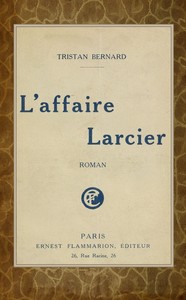
L'affaire Larcier : roman by Tristan Bernard
Authors: Bernard, Tristan, 1866-1947
Hey, have you read 'L'affaire Larcier' by Tristan Bernard? It's this clever little French mystery from the early 1900s that feels surprisingly modern. The setup is brilliant: a respectable man, Monsieur Larcier, gets caught up in a ridiculous scandal after a simple mix-up at a hotel. It starts with a case of mistaken identity and spirals into a full-blown public spectacle. The book isn't really about solving a crime—it's about watching an ordinary person try to navigate a world that's decided he's guilty based on gossip and appearances. It's funny, sharp, and makes you think about how quickly reputations can be ruined. If you like stories where the real mystery is human nature, you'll love this.
- Featured

La Maison du Chat-qui-pelote by Honoré de Balzac
Authors: Balzac, Honoré de, 1799-1850
Hey, have you ever wondered what happens when a young artist falls for the daughter of a shopkeeper? Balzac's 'The House of the Cat and Racket' is a sharp, short novel that captures that exact collision of worlds. It’s 1820s Paris, and the ambitious painter Théodore de Sommervieux is enchanted by Augustine, who lives above her family's drapery shop. This isn't just a love story—it's about the clash between romantic dreams and harsh, practical reality. Can love survive when two people come from such different lives? Balzac sets up this tension perfectly, and the result is both heartbreaking and incredibly smart about human nature. It’s a brilliant snapshot of a society in flux.
- Featured

Memoria sobre a descoberta das ilhas de Porto Santo e Madeira 1418-1419
Authors: Bettencourt, Emiliano Augusto de, 1825-1886
Ever wonder what really happened when Portugal 'discovered' Madeira? We all learned it was an accident—a ship blown off course. But this 19th-century account throws a wrench in that simple story. Emiliano Bettencourt digs through dusty archives to argue the discovery was no accident at all, but a secret, deliberate mission. It’s a short read that completely reframes a foundational moment of the Age of Discovery. If you think history is just settled facts, this little book will make you question how those stories get written in the first place. It’s a detective story, but the mystery is five hundred years old.