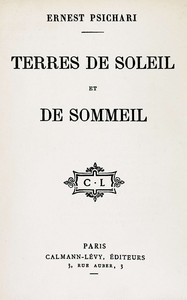
Terres de soleil et de sommeil by Ernest Psichari
Before we dive in, a quick note: Ernest Psichari was a real French soldier and writer who died in World War I. This book is a semi-autobiographical novel, which makes its questions feel even more urgent.
The Story
The story follows a young French officer stationed in the deserts of North Africa. On the surface, it's about military life in a colony—the routines, the landscapes, the distance from home. But the real plot happens inside the narrator's mind. He's surrounded by endless sand and blinding sun, a place nicknamed 'the land of sleep' for the numb, dreamlike state it induces. He grapples with deep boredom, questions his faith, and wrestles with a feeling that his life lacks any real anchor or higher purpose. The external quiet of the desert magnifies his internal restlessness.
Why You Should Read It
This book grabbed me because it's so honest about a feeling that doesn't have a simple name. It's not about dramatic action; it's about the weight of existing. Psichari writes about spiritual doubt and the search for meaning with a clarity that cuts through the 100-year gap since it was written. You feel the heat, the isolation, and the character's quiet desperation. It’s a slow, thoughtful read that makes you look at your own moments of uncertainty differently.
Final Verdict
Perfect for readers who love character-driven stories and don't mind a slow, meditative pace. If you're interested in early 20th-century literature, French colonial history, or stories about faith and existential crisis, this is a hidden gem. It’s not a beach read, but it's a profoundly rewarding one for a quiet afternoon when you're in a reflective mood.
This historical work is free of copyright protections. Knowledge should be free and accessible.