
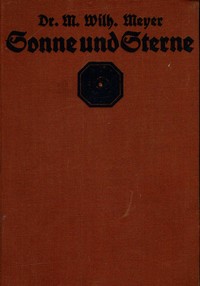
Sonne und Sterne by M. W. Meyer
I picked up this book expecting an old astronomy text, but it's something much more personal. Meyer, a real astronomer, wrote this for a general audience over a century ago.
The Story
There isn't a traditional story with characters and a plot. Instead, the book is built around conversations. Meyer imagines talking with his young daughter about the night sky. She asks simple, beautiful questions: 'Why does the sun shine?' 'Are the stars hot?' 'Where does the moon go?' He answers not just as a scientist, but as a father. He explains the hard facts—the nuclear fusion, the immense distances, the cold vacuum of space—but he also tries to preserve her sense of magic. The 'journey' is watching him balance these two worlds.
Why You Should Read It
What grabbed me was the timeless heart of it. This isn't a dry lecture. You can feel Meyer's love for his subject and his frustration. He wants to share the truth of his life's work, but he doesn't want to crush his daughter's wonder with cold facts. It's a dilemma any parent or teacher might recognize. Reading his careful, sometimes poetic explanations feels like peeking over his shoulder. The science is outdated, of course, but the human struggle—how do we share knowledge without killing awe?—is perfectly fresh.
Final Verdict
This is a niche read, but a rewarding one. It's perfect for anyone interested in the history of science communication, or for readers who love quiet, thoughtful books about big ideas. If you enjoy authors like Carl Sagan who connect science to human feeling, you'll see a kindred spirit here, writing in a much older style. Don't come for a page-turner; come for a gentle, insightful conversation with a passionate mind from the past.
This is a copyright-free edition. Preserving history for future generations.
Lucas White
1 year agoIf you enjoy this genre, the pacing is just right, keeping you engaged. I learned so much from this.
David Perez
5 months agoAmazing book.
Lisa Williams
1 year agoGreat reference material for my coursework.
David Thomas
1 year agoI didn't expect much, but the flow of the text seems very fluid. Exactly what I needed.







Edward Davis
1 year agoI started reading out of curiosity and the pacing is just right, keeping you engaged. Truly inspiring.